
How to Rank on Google's First Page: Complete SEO Guide for Indian Businesses 2026
Published on April 03, 2026
Yash Shinde
Apr 3, 2026 • 16 min read
If you have ever typed your business category into Google and watched your competitor appear on page 1 while your website sits on page 4, you already know what this guide is about. Getting to Google's first page is not luck. It is not a mystery. And it is not something you need to spend Rs.5 lakh a month on a large agency to achieve.
At VSS, we have built first-page rankings for businesses across Pune, Mumbai, Nagpur, and beyond — SaaS startups, local service businesses, D2C brands, and B2B firms. This guide gives you the complete framework we use, with nothing held back.
What You Will Learn
- What "first page" actually means in 2026 (it is no longer just 10 blue links)
- The five root causes that keep Indian businesses stuck on page 3-10
- The complete 7-step framework to rank on Google's first page
- How long ranking takes and what signals move the needle fastest
- A 20-point checklist you can audit your site against today
What "Ranking on Google's First Page" Actually Means in 2026
The first page of Google is no longer a single list of ten websites. In 2026, a typical Google search results page (SERP) for an Indian user can include:
- Google AI Overviews (AIO). An AI-generated summary that appears above everything else for informational queries. It cites 3-5 sources. If your site is cited, your brand gets exposure before any click happens.
- Local Pack (Maps results). For local queries like "SEO agency Pune" or "plumber near me," Google shows 3 business listings before organic results. These are controlled by your Google Business Profile, not your website's organic SEO.
- Featured Snippet (Position 0). A highlighted answer box that appears above position 1. Owning the featured snippet earns you the highest click-through rate on the page — often 35-40%.
- People Also Ask (PAA) boxes. Expandable question-and-answer dropdowns that appear mid-page. Answering these captures additional impressions and brand visibility.
- Organic results (positions 1-10). The traditional ten results. Position 1 still gets roughly 28% of all clicks; position 10 gets under 2%.
The implication: "ranking on page 1" in 2026 means targeting multiple SERP features simultaneously. A business that appears in the Local Pack, the Featured Snippet, and position 3 organically for the same query is capturing 60-70% of all available clicks. That is the real game.
Why 94% of Indian Business Websites Never Reach Page 1
We have audited over 100 Indian business websites at VSS. The reasons they fail to rank almost always fall into five categories:
- Targeting keywords they cannot win. A six-month-old website with zero backlinks is not going to rank for "digital marketing agency India." The keyword is too competitive. The strategic error is ignoring the hundreds of less competitive, high-intent keywords that would actually convert — like "performance marketing for SaaS startups Pune."
- Publishing thin content at scale. Fifteen 400-word blog posts about generic topics signal nothing to Google. One comprehensive, well-structured 2,500-word guide on a specific topic builds more authority than forty shallow articles. Depth beats breadth every time on a new domain.
- Ignoring technical SEO. Google cannot rank a website it struggles to crawl. Slow load speeds (LCP over 4 seconds is still common on Indian hosting), JavaScript-dependent content that Googlebot does not render, missing canonical tags causing duplicate indexing, and unsubmitted sitemaps are all ranking killers that content cannot overcome.
- No E-E-A-T signals. Anonymous content with no author attribution, no business credentials, no case studies, and no verifiable expertise is deprioritized by Google's ranking systems. In 2026, Google heavily rewards content from entities it can identify as genuinely expert.
- Building no backlinks. Backlinks remain one of Google's strongest ranking signals. Most Indian small business websites have zero external links pointing to them. Without backlinks, even excellent content struggles to outrank established competitors with domain authority built over years.
"Most Indian businesses are not losing to better competitors — they are losing to competitors who simply did the fundamentals correctly and consistently. Fix the fundamentals first."
The 7-Step Framework to Rank on Google's First Page
This is the exact sequence we follow at VSS for every new client engagement. The steps are ordered intentionally — skipping ahead without completing earlier steps is the most common reason SEO campaigns stall.
Step 1: Fix Your Technical SEO Foundation
Before publishing a single piece of content, Google needs to be able to find, crawl, and index your website correctly. Technical problems silently kill SEO campaigns that look fine on the surface.
The five technical fixes that have the highest impact for Indian websites:
- Submit and verify your sitemap in Google Search Console. Go to GSC → Sitemaps and submit your sitemap.xml. This tells Google exactly which pages exist and should be indexed. Without it, Google may miss pages entirely — especially on new domains.
- Fix your Core Web Vitals — especially LCP. Largest Contentful Paint (LCP) under 2.5 seconds is critical. Indian users on mobile 4G have higher latency, so a slow server or unoptimized images that load in 5 seconds on desktop can load in 8+ seconds on mobile. Use Google PageSpeed Insights and compress all images above 100KB.
- Audit for crawl errors and noindex accidents. Check GSC → Coverage for pages flagged as "Excluded." A common mistake is leaving
noindexon pages from development that never got removed before launch. - Add structured data on all key pages. At minimum:
Organizationschema on your homepage,LocalBusinesson your contact page,BlogPostingon every article,FAQPageschema on FAQ sections, andBreadcrumbListon every page. Structured data makes your site machine-readable and eligible for rich results. - Canonicalize properly. Every page should have a self-referencing canonical tag. If you have www and non-www versions, HTTP and HTTPS, or trailing slash and non-trailing slash variants — all should redirect to one canonical URL. Duplicate indexation wastes crawl budget and splits ranking signals.
Step 2: Pick Keywords by Intent, Not Just Volume
The single biggest keyword strategy mistake in India is targeting keywords by volume alone. A keyword with 10,000 monthly searches that you rank at position 8 for drives fewer clicks than a keyword with 500 monthly searches that you rank at position 1 for. And that high-volume keyword with a Keyword Difficulty of 70 on a new domain is effectively unranked — regardless of how good your content is.
The intent-first keyword selection process:
- Informational intent: "How does GST work for freelancers India" — high impressions, low commercial value, good for building authority and capturing top-of-funnel traffic.
- Commercial investigation: "Best SEO agency Pune vs Mumbai" — medium volume, high buying intent, strong conversion potential. These are the keywords most agencies compete for.
- Transactional: "Hire SEO expert Pune" — low volume, very high conversion intent. A page ranking here converts visitors to leads at 5-15% instead of 0.5-2% for informational pages.
- Local: "Google Ads agency Kothrud Pune" — very low volume, almost no competition, converts at 20-30%+. New websites can rank for these within weeks.
Build your keyword strategy across all four intent types, weighted toward commercial and local keywords for fast wins, and informational keywords for long-term impression volume.
Step 3: Build Topical Authority with Hub and Spoke Content
Google does not rank individual pages — it ranks entities. An entity is a website that Google recognises as a credible, comprehensive source on a specific topic. Building entity recognition requires covering a topic with depth and breadth, not just publishing one article.
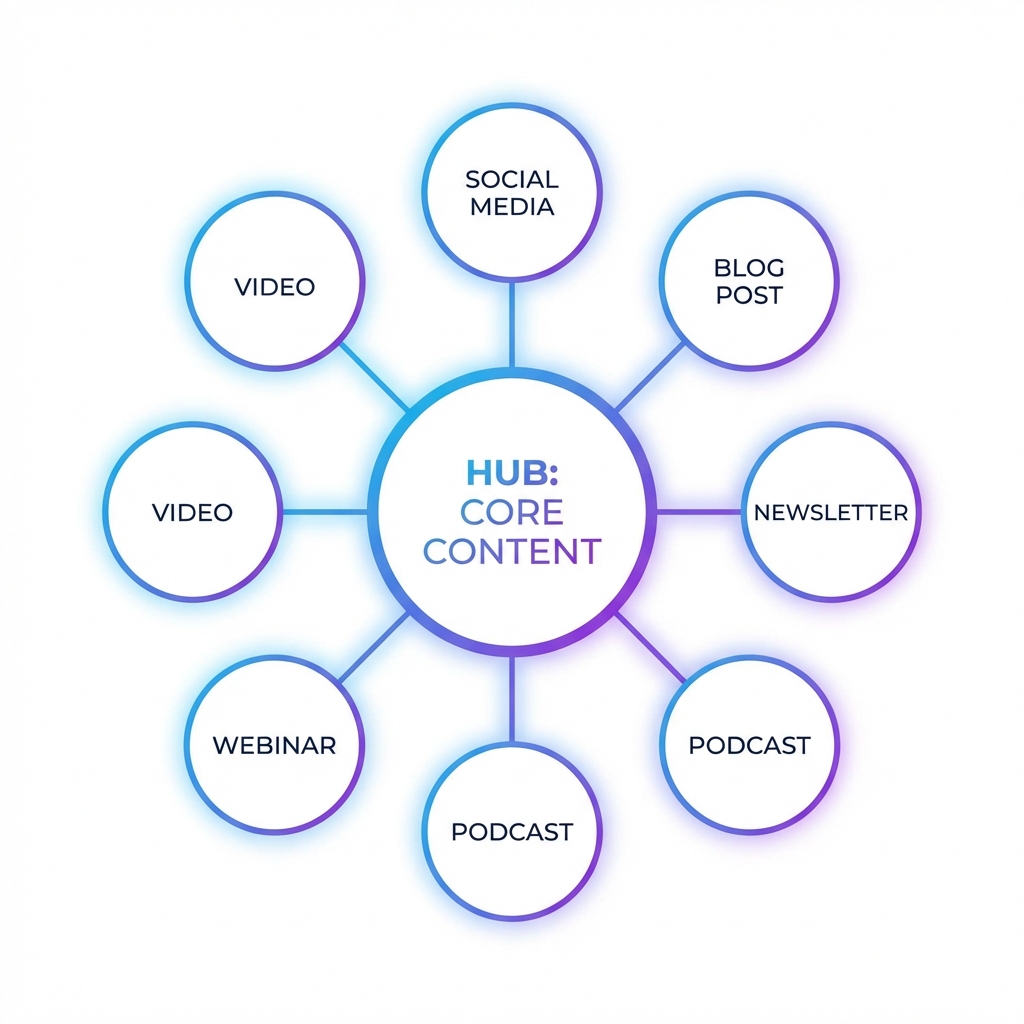
The most efficient structure for this is the Hub and Spoke model:
- Hub article: A comprehensive guide on your core topic (like this article on ranking on Google's first page). 2,500-4,000 words. Covers the topic from every angle.
- Spoke articles: 6-10 deeper dives on specific subtopics. For an SEO agency, this might be "Technical SEO audit checklist India," "How to build backlinks in India," "Local SEO for Mumbai businesses," etc. Each spoke links back to the hub and to relevant service pages.
- Internal linking: Every spoke links to the hub. The hub links to every spoke. This creates a content cluster that signals to Google: "This website is the authority on this topic."
Within 90 days of building a proper hub-and-spoke cluster, you will typically see the hub article's impressions multiply as Google begins understanding your topical authority.
Step 4: Write Content That Earns Clicks, Links, and AI Citations
There is a meaningful difference between content that ranks and content that ranks, earns clicks, attracts backlinks, and gets cited in Google AI Overviews. The format of content determines all three outcomes.
The content format framework VSS uses for every article:
- Lead with the answer. State your key insight in the first paragraph. "You can rank on Google's first page in India within 90 days for long-tail keywords by focusing on technical SEO, topical authority, and local intent targeting." This signals to Google's AI that your content directly addresses the search query.
- Use a "What You'll Learn" box. A bulleted summary at the top reduces bounce rate (readers know what they're getting) and gives Google's AI a scannable summary to source in AI Overviews.
- Structure H2s as questions or numbered steps. "What is topical authority?" or "Step 3: Build topical authority" are both more clickable than "Topical Authority." H2s appear in search previews and affect click-through rate.
- Include first-hand experience markers. "In our work with 40+ Indian businesses..." or "We've seen this pattern consistently across Pune SaaS clients" are E-E-A-T signals that AI Overviews specifically look for as proof of genuine expertise.
- End every article with FAQPage schema. 5-7 structured Q&A pairs at the end of every article directly increase your People Also Ask box appearances, your featured snippet eligibility, and your AI Overview citation rate. This is arguably the highest-ROI single technical change you can make to existing content.
Step 5: Build E-E-A-T Signals Google Can Verify
E-E-A-T — Experience, Expertise, Authoritativeness, Trustworthiness — is Google's quality framework for evaluating whether a website deserves to rank. It is not a direct algorithm but a collection of signals that Google's systems use to approximate trustworthiness.
For Indian businesses, the E-E-A-T signals that matter most are:
- Author attribution with credentials. Every blog post needs a named author with a linked profile page showing their background, years of experience, and areas of expertise. Anonymous content has zero E-E-A-T value.
- Google Business Profile optimization. A fully optimized GBP with photos, updated hours, services, posts, and 20+ reviews is a powerful trust signal for local businesses. Google can verify your business exists and is legitimate — which directly feeds your organic rankings for local queries.
- About page with real credentials. Founding year, registered business name, physical address, team photos, and case study results all contribute to Google's entity verification. A sparse "we are a digital marketing agency based in Pune" is not sufficient.
- Client testimonials and results. Case studies with specific, verifiable outcomes (not "we increased traffic by 200%") are powerful trust signals. Include client names (with permission), industry, and the specific problem solved.
- External mentions and press coverage. Being mentioned or quoted in Indian digital publications (YourStory, Inc42, Economic Times Tech) builds authoritativeness that no internal content can replicate.
Step 6: Earn Quality Backlinks from Relevant Indian Sources
Backlinks are still one of Google's top three ranking factors. A backlink is a vote of confidence from one website to another. But not all votes are equal — a link from a relevant Indian industry publication is worth 50 irrelevant directory links.
The most effective backlink strategies for Indian businesses in 2026:
- Guest posts on Indian publications. Writing genuinely useful articles for publications like YourStory, Inc42, TechCircle, or industry-specific Indian blogs earns high-authority links with a relevant audience.
- HARO and journalist outreach. Respond to media queries on HARO (Help A Reporter Out) and similar platforms. Being quoted as an expert in articles builds both backlinks and brand mentions.
- Indian business directories. JustDial, Sulekha, IndiaMART, and TradeIndia all provide indexed backlinks and also drive direct local leads. Claim and optimize your profiles on all of them.
- Digital PR. Create genuinely newsworthy content — original research, data reports, industry surveys. A well-promoted data piece can earn 10-30 backlinks from news coverage alone.
- Partner and supplier links. Ask clients, suppliers, and business partners to link to your website. These are highly relevant contextual links that are underutilized by most Indian businesses.
Important: What Not To Do
Never buy backlinks from link farms, private blog networks (PBNs), or fiverr gig sellers promising "500 backlinks for Rs.999." Google's spam detection in 2026 is highly accurate. A manual action (penalty) from Google can take 12-18 months to recover from — far more damaging than building links slowly and correctly.
Step 7: Measure Correctly and Iterate Monthly
The biggest measurement mistake Indian businesses make: checking keyword rankings and concluding "SEO isn't working" when they've only been at it for 45 days. Rankings fluctuate daily. Impressions and clicks in Google Search Console tell a far more reliable story.
The correct SEO metrics to track monthly:
- Total impressions (GSC). Rising impressions — even before rankings improve — mean Google is indexing and surfacing your content for more queries. This is the earliest signal that your strategy is working.
- Click-through rate (CTR) by query. A page with 1,000 impressions and a 1% CTR is getting 10 clicks. The same page with a better title and meta description can get a 5% CTR — 50 clicks from identical rankings. CTR optimization is free traffic.
- Indexed pages (GSC → Coverage). Watch for pages dropping out of the index unexpectedly. This signals crawl issues that need immediate attention.
- Core Web Vitals (GSC → Core Web Vitals). Monitor for regressions. A new plugin or image added without optimization can tank your LCP score and affect rankings within weeks.
- Organic conversions (GA4). Track which organic landing pages generate leads or sales, not just traffic. SEO success is ultimately measured in revenue, not visits.
Every 90 days, review your top 10 articles by impressions. Update any with outdated information, add new FAQ items, improve the introduction, and re-submit them in GSC via "Request Indexing." Fresh updates to existing content often produce ranking improvements faster than publishing new articles.
How Long Does It Take to Rank on Google's First Page in India?
Honest answer — it depends on four variables: your domain age, your competition level, the consistency of your effort, and how well you execute the technical foundation.
| Scenario | Keyword Type | Expected Timeline |
|---|---|---|
| New website, hyper-local targeting | "plumber Baner Pune" | 30-60 days |
| 6-month-old site, city-level competition | "SEO agency Pune" | 3-6 months |
| Established site, national competition | "digital marketing agency India" | 6-12 months |
| Any domain, high-competition national | "best SEO company India" | 12-24+ months |
The businesses that succeed fastest are those who start with local and long-tail keywords to build early wins, then use that authority and domain trust to climb toward more competitive terms. This is a compounding strategy — early wins make later wins easier.
First-Page Ranking by Business Type
The core framework above applies to all businesses. But the priority order shifts based on business model:
- Local Service Businesses (CA firms, clinics, contractors, restaurants)
- Priority 1 is Google Business Profile. Local Pack rankings (the map results) are the single highest-ROI move for any local business in India. Fully optimized GBP + 20+ reviews + local keyword-rich posts can put you in the top 3 map results within 30-45 days for your city-level keywords. This drives calls and footfall directly — no website ranking required.
- SaaS and Tech Startups
- Priority 1 is topical authority through content. SaaS buyers research extensively before buying. A startup that publishes the most comprehensive resources on its core problem — and ranks for the 50 informational queries buyers search during their research — builds a sales funnel that converts at far lower CAC than paid ads. Combine with AI Overview optimization to capture the new generation of AI-assisted research.
- E-commerce Brands
- Priority 1 is product page and category page optimization. Most Indian e-commerce SEO fails because product pages have duplicate manufacturer descriptions and no unique content. Unique product descriptions, schema markup (Product, Review, Offer), and optimized category pages that answer buyer questions are the highest-ROI changes. Combine with conversion rate optimization so that increased organic traffic converts at a higher rate.
- B2B Professional Services
- Priority 1 is LinkedIn authority + targeted content. B2B buyers in India research on both Google and LinkedIn simultaneously. Building case study content that ranks on Google, shared by the founder on LinkedIn, creates a compounding trust cycle. Target keywords at the commercial investigation intent level — "best B2B lead generation strategy India" — and tie every article to a specific service page CTA.
Your First-Page Ranking Checklist
Use this to audit your current state. Each item is a ranking signal. The more boxes you check, the faster your trajectory.
Frequently Asked Questions
Related Reading
Hub & Spoke SEO: Build Topical Authority
The content architecture strategy behind first-page topical authority.
Rank in Google AI Overviews: 2026 Guide
How to get cited above position 1 in Google's AI-generated answers.